FOR IMMEDIATE RELEASE
Carbon Chicken Project Partners with University of Arkansas on $1.9 Million EPA Grant to Revolutionize Watershed Health through Biochar Innovation
FAYETTEVILLE, AR — March 9, 2026 — The Carbon Chicken Project (CCP) is proud to announce its role as a key subrecipient and strategic partner in a transformative $1.9 million research grant awarded by the Environmental Protection Agency (EPA) to the University of Arkansas. This three-year initiative, led by Assistant Professor Shannon Speir, aims to demonstrate how the integration of biochar with poultry litter can drastically improve water quality and agricultural sustainability across the Brush Creek and Beaver Lake watersheds.
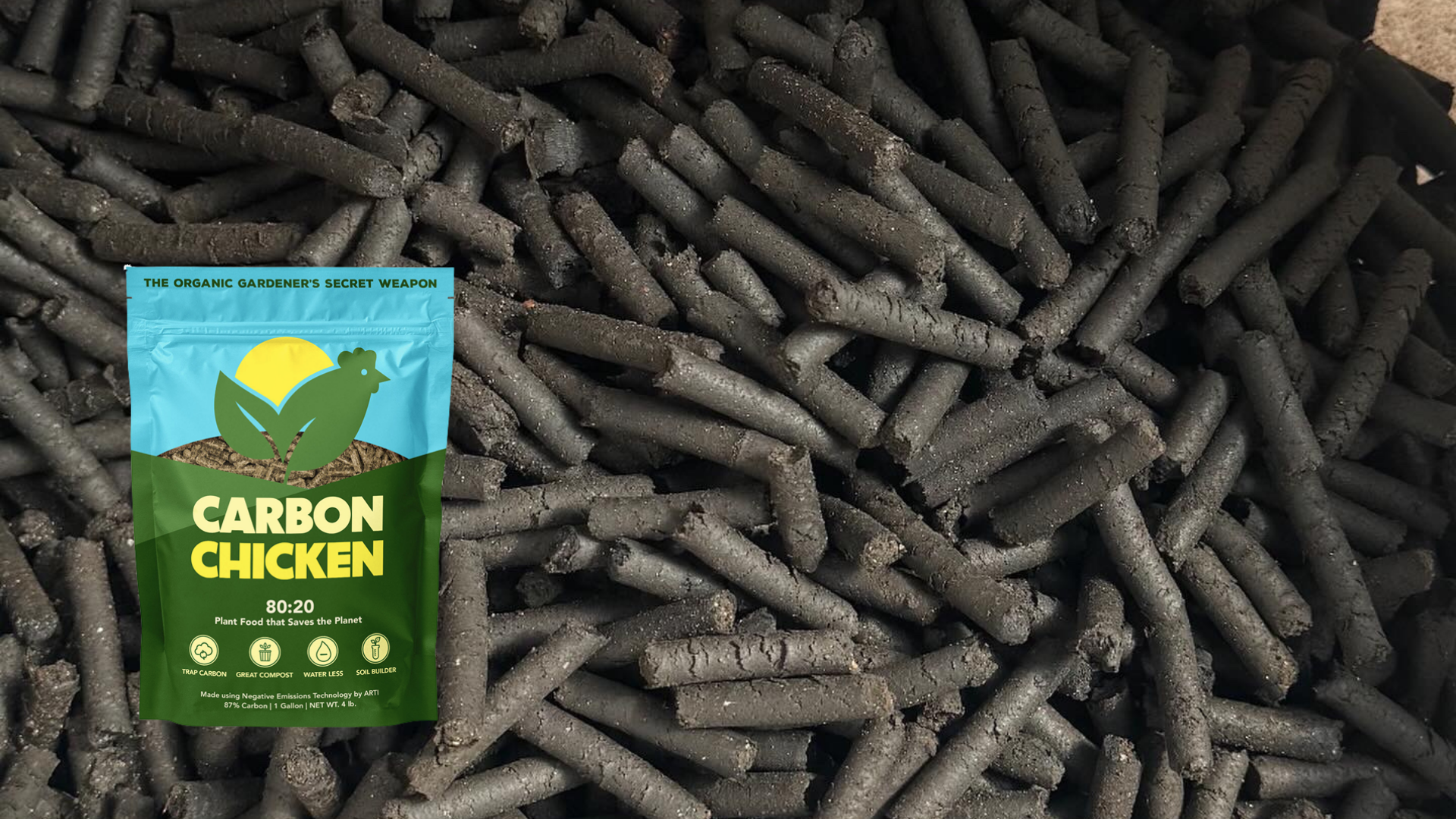
While the University of Arkansas provides world-class academic research and edge-of-field monitoring, the Carbon Chicken Project brings a unique, market-ready business model to the partnership. CCP’s primary contribution focuses on the practical application and regional “export” strategy of its flagship product, CarbonChicken80:20, a proprietary blend of 80% composted poultry litter and 20% inoculated biochar.
“We are honored to collaborate with such a prestigious institution as the University of Arkansas to validate the environmental science behind our work,” said Jody Hardin, CEO of Carbon Chicken Project. “However, CCP’s mission goes beyond the lab. We have developed a circular bio-economy model that transforms poultry litter from a regional pollutant into a high-value ‘export’ commodity—a stable, pelletized soil amendment that sequesters carbon and restores soil health far beyond the borders of Northwest Arkansas”.
A Unique Business Model: Upcycling and Exporting Sustainability Unlike traditional waste management, CCP’s strategy is built on a "Carbon Negative Nutrient Management" (CNNM) framework:
Upcycling at Scale: CCP intercepts excess poultry litter—over 300,000 tons of which are produced annually in Washington and Benton Counties alone—and upcycles it into a premium, value-added product.
The "Export" Strategy: By pelletizing the biochar-litter blend, CCP creates a stable, slow-release product that is easy to transport and precision application. This allows for the "export" of excess nutrients from sensitive watersheds like the Illinois River and Beaver Lake to regions in need of soil revitalization, effectively balancing nutrient loads across the state and nation.
Carbon Sequestration: Every bag of CarbonChicken80:20 contains 20% biochar, a stable form of carbon that remains sequestered in the soil for centuries, providing a practical tool for carbon-negative agriculture and nutrient retention.
Empowering the Watershed through Innovation The grant project will utilize CCP’s expertise to implement field-level treatments, aiming for a 15%-25% reduction in nitrate loss and a 5%-10% reduction in phosphorus loss. CCP will play a vital role in farmer-to-farmer training, leveraging its Carbon Chicken Innovation Farm near Fayetteville as a hub for demonstrating regenerative practices to local and underserved producers.
By combining the University's rigorous scientific oversight with CCP’s entrepreneurial "export" model, this partnership ensures that the research translates into immediate, scalable economic and environmental benefits for the region's farmers and the global climate.
About Carbon Chicken Project (CCP) Based in Fayetteville, Arkansas, the Carbon Chicken Project is a leader in regenerative agriculture and circular bio-economy solutions. Through its innovative use of biochar, microbial inoculants, and composted poultry litter, CCP addresses the interconnected challenges of soil degradation, water pollution, and greenhouse gas emissions.
For more information, visit carbonchicken.store.
Media Contact:
Jody Hardin
CEO, Carbon Chicken Project
jody@carbonchicken.com
Mobile: 870.370.4047
Richard Ims
COO, Carbon Chicken Project
richard@carbonchicken.com
479.866.3310